

New Study’s Data Shows Supreme Court Increasingly Favors The Rich
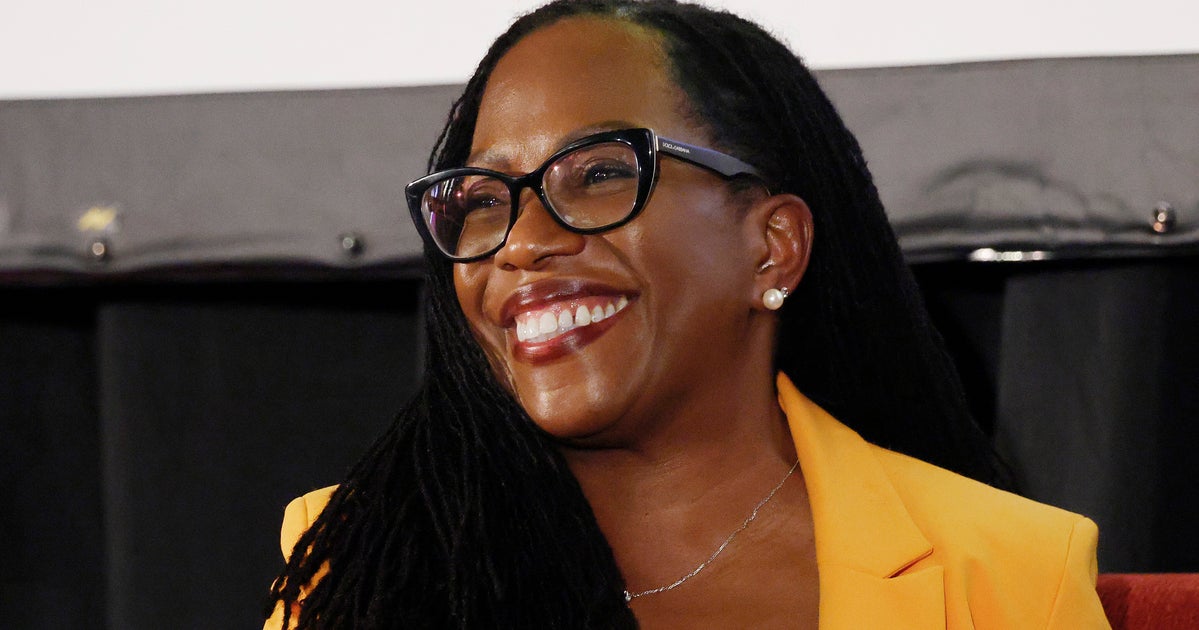
In a blistering dissent last summer, Supreme Court Justice Ketanji Brown Jackson noted that much of the public is under the distinct impression the high court is biased toward rich people and corporations.
Its majority opinion in an auto emissions case, she wrote, was doing them no favors.
“This case gives fodder to the unfortunate perception that moneyed interests enjoy an easier road to relief in this court than ordinary citizens,” Jackson wrote.
Advertisement
New data from economists at Columbia and Yale backs her up.
A working paper titled “Ruling For the Rich” released this month by the National Bureau of Economic Research found that, over the past seven decades, Republican appointees on the Supreme Court have become far more likely than Democratic appointees to rule in favor of parties with more financial resources.
The team of researchers looked at all cases “involving economic issues” from 1953 to present day, employing a protocol to label the court’s decisions either “pro-rich” or “pro-poor.”
Examples include a 2007 case, Massachusetts v. EPA, that said the Clean Air Act of 1970 applied to greenhouse gas emissions; it was categorized as pro-poor.
Advertisement
“This assessment has a subjective component, as it is made by human assessors,” they wrote. “However, the protocol (described in more detail below) is transparent and replicable, and it contains several integrity checks.”
“In the 1950s, justices appointed by the two parties appear similar in their propensity to cast pro-rich votes. Over the sample period, we estimate a steady increase in polarization, culminating in an implied party gap of 47 percentage points by 2022,” the team said.
“The magnitude of the gap suggests the usefulness of an economic metric for prediction relative to ideologies such as originalism or textualism.”
Advertisement
Conservative justices like Clarence Thomas or Samuel Alito sometimes use such ideologies — based in supposed beliefs of the people who wrote a law at the time it was passed — to justify their decisions. The paper’s authors point out that justices who invoke these ideologies do not always use them in consistent ways.
“Making the rich richer may not be an ideology that is easily justifiable to ordinary citizens, but does a better job at explaining decisions than theories of statutory or constitutional interpretation, e.g. originalism,” they said.
For Jackson, the court’s bias may be evident as much in the actions it takes as in the actions it does not take.
Advertisement
In her dissent last June, the justice suggested the court may be disproportionately permitting those “moneyed interests” the rarified chance to be heard before the highest court in the land, showing a “simultaneous aversion to hearing cases involving the potential vindication of less powerful litigants — workers, criminal defendants, and the condemned, among others.”
