

Senate Votes To Limit Trump’s Power To Wage War In Venezuela
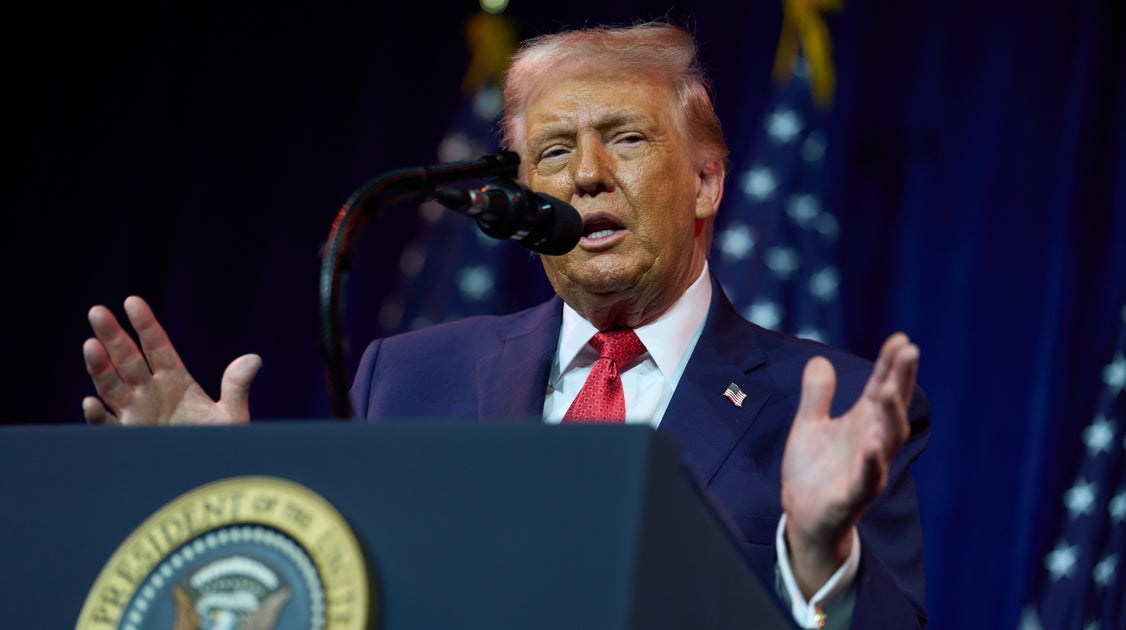
WASHINGTON ― The U.S. Senate on Thursday advanced a resolution blocking Donald Trump’s ability to use further military force against Venezuela without the approval of Congress, rebuking an emboldened president who has continued to threaten action against other Latin American countries and even Greenland, an autonomous territory of a U.S. ally.
Five Republicans joined all Democrats in support of the measure: Sen. Rand Paul (Ky.), Sen. Lisa Murkowski (Alaska), Sen. Susan Collins (Maine), Sen. Todd Young (Ind.), and Sen. Josh Hawley (Mo.).
Advertisement
The effort to curtail Trump’s powers followed the extraordinary U.S. bombardment of Venezuela and the capture of its president, Nicolàs Maduro and his wife, Cilia Flores, on charges of “narco-terrorism.” The Trump administration has called the action a law enforcement operation despite the fact that it killed over 80 people, and many Republican lawmakers have insisted that Trump had authority to order the mission without the approval or notification of Congress ahead of time.
But critics of the administration noted the U.S. Constitution is clear that Congress must first declare war before the president can deploy the use of force.
“Less than courageous members of Congress fall all over themselves to avoid taking responsibility, to avoid the momentous vote of declaring war,” Paul said. “But make no mistake, bombing another nation’s capital and removing their leader is an act of war, plain and simple. No provision in the Constitution provides such power to the presidency.”
Advertisement
Sen. Tim Kaine (D-Va.), who introduced the bill alongside Paul, added, “We should not be risking the lives of our nation’s servicemembers to engage in military action within Venezuela without a robust debate in Congress. This is why the Framers gave the power to declare war to Congress, not the president.”
Thursday’s vote was brought under the War Powers Resolution of 1973, passed by Congress in the wake of the Vietnam War as a way to reassert congressional power over the declaration of war. The law allows such resolutions to come to the Senate floor under a majority vote threshold.
The measure is mostly symbolic, however, since the White House had indicated Trump would veto the legislation even if it passes in both chambers of Congress.
Advertisement
But Senate GOP leaders worked hard to defeat the measure anyway, warning it would tie the hands of Trump and prevent him from going after drug traffickers in Latin America.
“It does not reassert Congress’s powers,” Senate Majority Whip John Barrasso (R-Wyo.) said ahead of the vote. “It does not make America stronger. It makes America weaker and less safe. It would weaken the president’s legitimate, constitutional authority.”
Republican senators who bucked their party and voted to advance the measure said they opposed committing military troops to Venezuela.
Advertisement
“The President and members of his team have stated that the United States now ‘runs’ Venezuela,” Young, a former U.S. Marine, said in a statement. “It is unclear if that means that an American military presence will be required to stabilize the country. I – along with what I believe to be the vast majority of Hoosiers – am not prepared to commit American troops to that mission.”
Democrats, meanwhile, argued that passage of the resolution would send an important message just as the Trump administration is saber-rattling against other countries, including Colombia, Mexico, Iran, Cuba and Greenland.
“I think we’re on the steps to an endless war,” Senate Minority Leader Chuck Schumer (D-N.Y.) said Wednesday. “Trump campaigned … against endless war in Iraq. And now he is not just bumbling into it. He’s heading full steam ahead into it.”
Advertisement
The vote on Thursday discharged the resolution out of committee and to the Senate floor. It must be voted on again for final passage, which is likely to occur next week.
