

Federal decide seems unswayed by Trump’s try and void his hush cash conviction
A federal judge has indicated he is likely to once again dismiss Donald Trump’s attempt to overturn his hush money conviction, sharply criticising his legal team for what he described as “taking two bites at the apple.”
Judge Alvin K. Hellerstein, tasked by an appeals court to re-evaluate the matter, displayed a mix of questioning and disbelief during nearly three hours of arguments. Trump is seeking to transfer his case from the state court where he was tried to a federal jurisdiction, where he could then petition for its dismissal on grounds of presidential immunity.
Throughout the proceedings in a Manhattan federal court, Judge Hellerstein frequently challenged Trump’s lawyer, Jeffrey Wall. The judge suggested the entire endeavour was futile because Trump’s legal team had waited too long after the historic May 2024 verdict to seek relief in federal court. He stated he would issue a ruling at a later date.
Judge Hellerstein acknowledged that a US Supreme Court ruling, issued approximately a month after the verdict, which stipulated that presidents cannot be prosecuted for official acts, had introduced unprecedented legal questions previously unaddressed by the courts. However, he emphasised that the high court’s decision made clear that “a president is not above the law.”
In November, the 2nd U.S. Circuit Court of Appeals instructed Judge Hellerstein to reconsider his earlier decision that kept the New York case in state court. A three-judge panel found that his September 2025 ruling had failed to consider “important issues relevant” to Trump’s request to move the case, though they offered no opinion on how he should ultimately rule.
Trump was not present at Wednesday’s arguments. Following the hearing, Judge Hellerstein thanked both Wall and Steven Wu, a lawyer from the Manhattan district attorney’s office, for their “very provocative arguments.” The district attorney’s office, which prosecuted the case, is advocating for it to remain in state court.
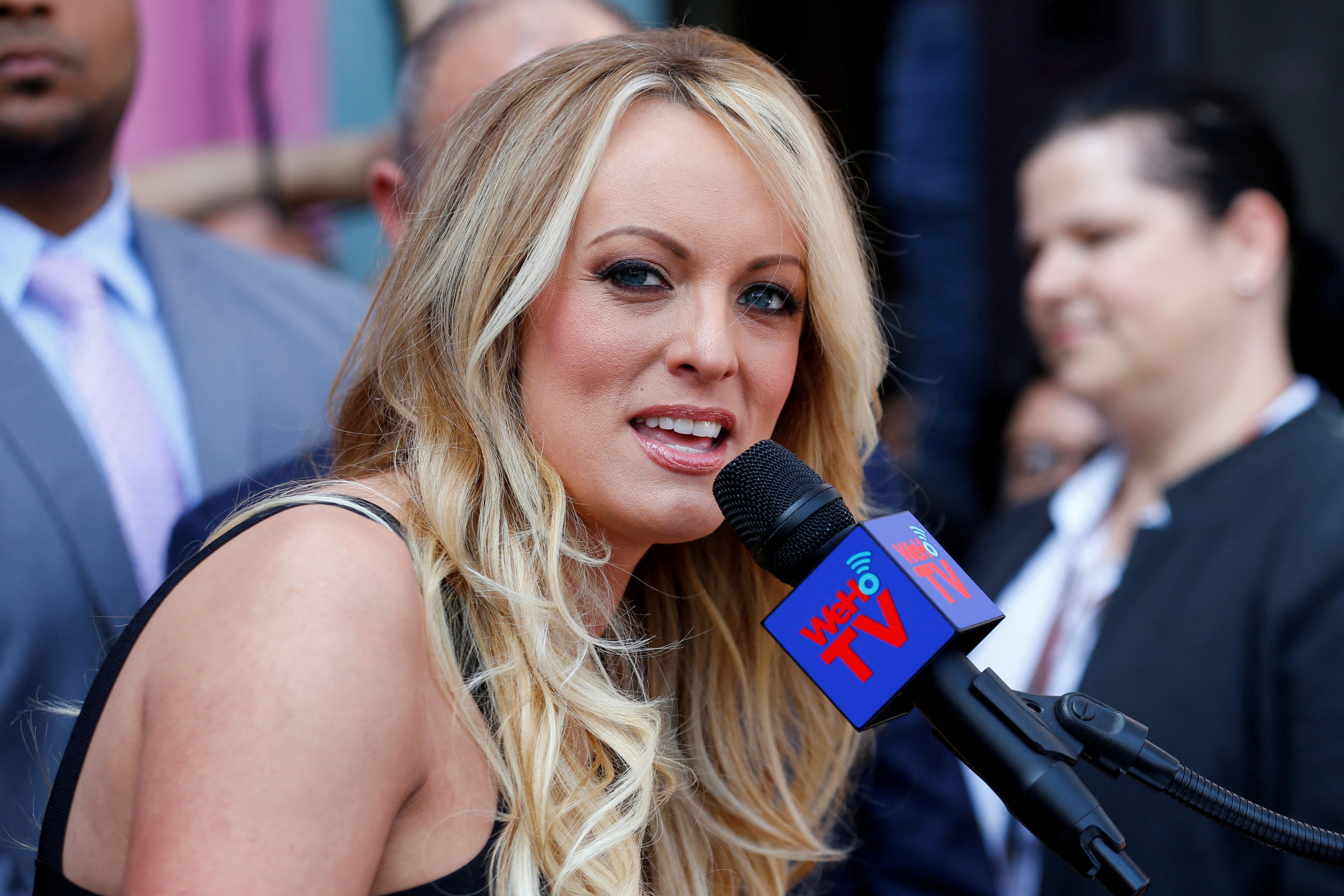
Trump was convicted in state court in May 2024 on 34 felony counts of falsifying business records. This was in connection with concealing a hush money payment to adult film actor Stormy Daniels, whose allegations of an affair with Trump threatened to derail his 2016 presidential campaign. He received an unconditional discharge, meaning his conviction stands but he faced no further punishment. Trump denies Daniels’ claim and maintains his innocence, having already appealed the conviction to a state appellate court.
Judge Hellerstein interrupted Wall almost immediately as Wednesday’s arguments commenced, interjecting his thoughts and questions and telling the lawyer, “I think I have to quarrel with you a bit” regarding the sequence of events following Trump’s May 2024 conviction. The judge took issue with the decisions made by Trump’s legal team after the Supreme Court ruling.
Instead of promptly seeking to move the case to federal court, Trump’s lawyers initially asked the trial judge, Juan Merchan, to dismiss the verdict on immunity grounds. Wall contended that Trump’s lawyers faced a time constraint after the Supreme Court’s 1 July 2024 ruling, as Mr Trump’s sentencing was scheduled just 10 days later. Wall suggested that had Mr Trump’s lawyers attempted to bring the case to federal court at that point, the district attorney’s office might have criticised it as premature.
Trump’s lawyers did not ask Judge Hellerstein to intervene until nearly two months later. The judge on Wednesday labelled this a “strategic decision” and implied that by first pursuing remedies in state court, Trump’s lawyers forfeited his right to seek relief in federal court.
“No, your honour,” Wall responded. “It is what any sensible litigant would do” in such a situation.
“Not so,” Judge Hellerstein retorted. “That is a decision on your part. You didn’t have to do that. You could have come right to the federal court. Just by filing a notice of removal, there would be no sentencing.”
Trump’s lawyers “made a choice,” Judge Hellerstein concluded, “and you sought two bites at the apple.” Typically, such a request must be made within 30 days of an arraignment, though a federal appeals court in Washington, D.C. has ruled that exceptions can be made if “good cause” is demonstrated.
Wu concurred, stating that Wall’s argument “confirms this was a strategic choice by the defendants.” He added that Trump’s lawyers were aware they could have simultaneously submitted arguments or a letter to Judge Merchan while still attempting to transfer the case to federal court. Previous rulings, Mr Wu noted, have made it clear that “you cannot go to state court and when you’re unhappy, then go to federal court.”
Judge Hellerstein, who was nominated by Democratic President Bill Clinton, has twice previously denied Trump’s requests to move the case. The first instance was after Trump’s March 2023 indictment; the second was the post-verdict ruling that was the subject of Wednesday’s hearing.
In that earlier ruling, Judge Hellerstein stated that Trump’s lawyers had failed to meet the stringent burden of proof required for changing jurisdiction and that Trump’s conviction for falsifying business records pertained to his personal life, not official actions that the Supreme Court has deemed immune from prosecution.
The 2nd Circuit panel noted that Judge Hellerstein’s ruling, which echoed his pre-trial denial, “did not consider whether certain evidence admitted during the state court trial relates to immunized official acts or, if so, whether evidentiary immunity transformed” the hush money case into one concerning official acts. The three judges instructed Judge Hellerstein to meticulously review any evidence Trump claims relates to official acts.
Should Judge Hellerstein determine that the prosecution relied on evidence of official acts, the judges advised him to consider whether Trump can argue those actions were undertaken as part of his White House duties, whether Trump “diligently sought” to have the case moved to federal court, and whether the case can even be transferred to federal court now that Trump has been convicted and sentenced in state court.
Source: independent.co.uk
