

Big Money Hits A Wall In Illinois Democratic Primaries
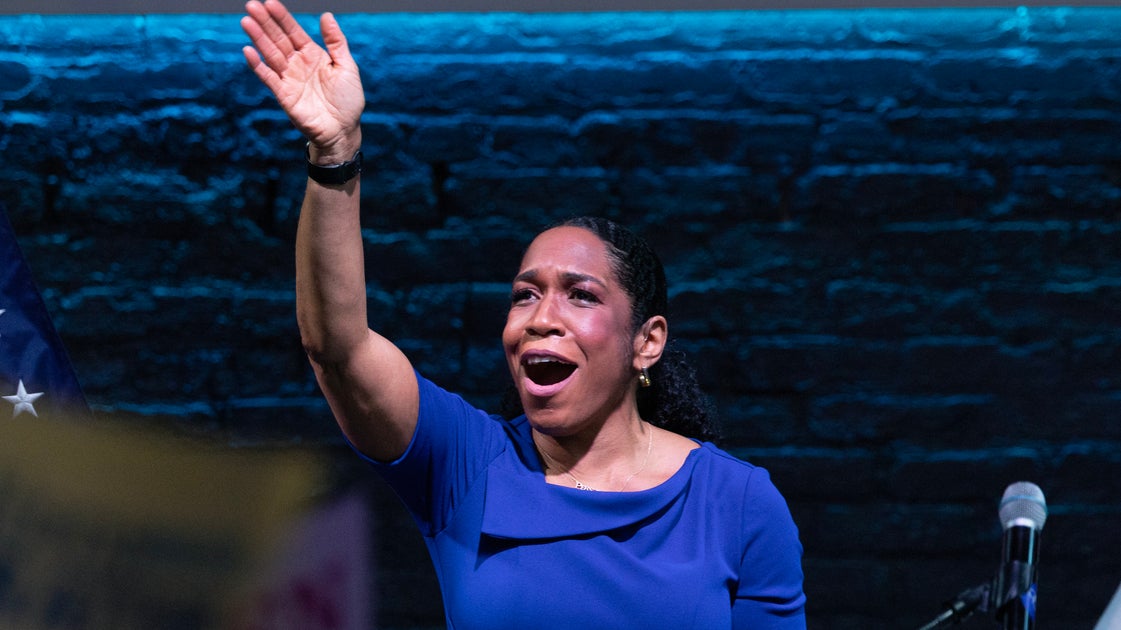
Rep. Raja Krishnamoorthi’s huge early financial advantage in Illinois’ Democratic Senate primary did not lead to a victory, but Lt. Gov. Juliana Stratton likely would’ve been screwed without the financial support of Gov. JB Pritzker.
AIPAC’s millions could not prevent their candidates from crashing and burning in two key races, but they and other interest groups got their preferred candidates elsewhere.
Advertisement
Illinois’ Democratic primaries were a vivid display of both the power of money in politics – and the limits of that power.
Two ways to look at it: First, the more voters paid attention, the less powerful the cash was. Second, it’s not always important to have the most money, but it is important to have enough money.
In the Senate primary, Krishnamoorthi’s early financial advantage – he entered the race with a $19 million war chest and spent heavily throughout the summer and fall on ads introducing himself – faded as the vote approached, news coverage increased and voters tuned in. Stratton ended up holding her own in downstate television markets where Krishnamoorthi had been on the air continuously, but where Stratton and her allies had not purchased a single commercial.
Advertisement
At the same time, Stratton’s own campaign fundraising was so poor – she raised just $4 million over the length of the campaign – that she would not have been able to fight back when the cryptocurrency industry-backed super PAC Fairshake began attacking her late in the campaign without the $5 million Pritzker gave to super PACs supporting her.
Super PACs backed by crypto, the artificial intelligence industry and AIPAC spent more than $35 million combined on four open Democratic House primaries in Chicago. All of them had mixed success.
Besides losing the Senate race, crypto groups successfully swamped state Sen. Robert Peters in one district but failed to defeat Rep. La Shawn Ford in another. An AI group backed by OpenAI to fight regulation of the technology also unsuccessfully tried to lift former Rep. Jesse Jackson, Jr.’s comeback bid.
Advertisement
AIPAC failed in the 9th District, where its spending became a top campaign issue, as Evanston Mayor Daniel Biss won. They also flopped in the 7th, where they had backed a candidate running against Ford. AIPAC did support Cook County Commissioner Donna Miller, who won in the 2nd District. And moderate former Rep. Melissa Bean’s victory in the 8th District was a triumph for AI, crypto and AIPAC – all of which backed her.
It all adds up to a decidedly mixed record of effectiveness.
Yet the big spending, often routed through innocuous-sounding front groups, proved confusing to voters and frustrating to elected officials both on and off the ballot in the state. It may even be enough to spur action.
In an interview with HuffPost last week, Rep. Greg Casar (D-Texas) indicated that Democratic leaders were growing increasingly concerned about the scale of outside spending in primary races.
Advertisement
“This is getting way out of hand,” Casar said. “In the past, I’d say more establishment or longtime Democratic leaders would say: ‘Well, this super PAC big money is really just a problem for progressives.’ But now I think it’s become clear that this is a problem for all voters and for all Democrats.”
Here are three more takeaways from Illinois’ Democratic primaries:
Good sign for the Senate insurgency
Stratton is not a dyed-in-the-wool progressive; she’s far enough left to earn an endorsement from Sen. Elizabeth Warren (D-Mass.), but not from Sen. Bernie Sanders (I-Vt.). However, some of her campaign themes and positioning echoed those of other insurgent Senate candidates.
Stratton does not take corporate PAC money, and Krishnamoorthi’s attempts to portray her as a hypocrite for accepting other types of corporate money earlier in her career were not especially effective. The same battle is set to play out between progressive insurgents and establishment candidates in both Michigan and Minnesota.
Advertisement
Stratton also said she would not support Senate Minority Leader Chuck Schumer continuing as leader of the Democratic Party, a position held by state Sen. Mallory McMorrow in Michigan and oyster farmer Graham Platner in Maine.
An advertisement for ranked-choice voting
The winners of the Senate race and the four House races up for grabs all won with less than 50% of the vote, and all of them represent districts so blue that they are basically guaranteed to win in November. In many districts, public polling was limited, making it hard for voters to strategically choose how best to advance their preferences.
Would Biss have won if supporters or further-left candidates like researcher Kat Abughazaleh, Bushra Amiwala and Mike Simmons had been able to rank their choices? Would Bean be headed back to Congress if the more liberal candidates in her race hadn’t split the vote? Ranked-choice voting – or even runoffs – would help ensure that candidates winning congressional seats in low-turnout primaries at least get a majority of the vote in those races.
Advertisement
Lefty rebrands
During her time in Congress, Bean was a business-friendly moderate, but she came across in special-interest advertisements as a champion of the working class. A pro-Bean ad from an AIPAC-linked group called Elect Chicago Women highlighted Bean’s support for the Affordable Care Act in 2010, eliding her centrist record and the fact that she was undecided on the bill just days before a key House vote that March.
An ad by the AI-aligned group Think Big highlighted Bean’s vote for Wall Street reform, omitting that, as a member of the House Financial Services Committee, she pushed to water down aspects of the bill.
The Progressive Change Campaign Committee noted that an AIPAC-backed super PAC airing ads for state Sen. Laura Fine in the 9th District similarly emphasized how Fine “stood up to health insurance company rip-offs.”
Advertisement
Their conclusion?
“Even corporate and billionaire-funded Super PACs know that voters want Democrats who are bold economic populist fighters – not corporate tools,” the group wrote.
Arthur Delaney contributed reporting.
