

Iran-US conflict newest: Trump ‘considers risky ground invasion of key Iranian island’ to reopen Strait of Hormuz
Donald Trump is reportedly considering plans to occupy or blockade Iran’s Kharg Island to pressure Iran into reopening the Strait of Hormuz.
The Kharg Island, which sits 15 miles offshore and processes 90 per cent of Iran’s crude oil exports, is a key asset to the Tehran regime – but sources have warned that a ground operation could put US troops directly in the line of fire.
“He wants Hormuz open. If he has to take Kharg Island to make it happen, that’s going to happen. If he decides to have a coastal invasion, that’s going to happen. But that decision hasn’t been made,” a senior administration official told Axios.
It comes as Washington deployed low-flying jets and Apache helicopters to strike Iranian vessels and drones near the shipping lane in the Strait of Hormuz as part of renewed efforts to reopen the passageway, currently under Iranian control.
US general Dan Caine said: “The A-10 Warthog is now in the fight across the southern flank and is hunting and killing fast attack watercraft in the Straits of Hormuz. In addition, AH-64 Apaches have joined the fight on the southern flank, and they continue to work on the southern side.”
Israel strikes Iran’s feared Basij from commanders down to street level, but its grip remains strong
Hours after Israel killed the top commander of Iran’s Basij this week, it struck again – this time at the rank and file of the feared force that helped crush widespread protests this year.
A drone blasted one of the Basij’s many temporary roadblocks erected around the capital, Tehran.Israel and the US say they aim to break the Islamic Republic’s tools of domestic control in their campaign of bombardment, now nearly three weeks old.
Since the war began, monitors estimate that up to a third of strikes have targeted the top echelons and major bases of the paramilitary Revolutionary Guard and its Basij volunteers tasked with enforcing loyalty to Iran’s theocratic rulers.
Last week, Israel began striking Basij checkpoints, extending the threat to low-ranking members. But the Basij, police and Revolutionary Guard have maintained their grip, and there has been no sign yet of Iranians heeding US and Israeli calls to rise up, as many seek refuge from the airstrikes and uncertainty.
Iranian man arrested trying to get into naval base where Britain’s nuclear submarines are
A 34-year-old man, understood to be Iranian, has been arrested after trying to get into Faslane naval base where Britain’s nuclear submarines are based, Police Scotland said.
A Police Scotland spokesman said: “Around 5pm on Thursday, 19 March, 2026, we were made aware of two people attempting to enter HM Naval Base Clyde.
“A 34-year-old man and 31-year-old woman have been arrested in connection and enquiries are ongoing.”
Watch: Trump denies he’s sending troops to Iran
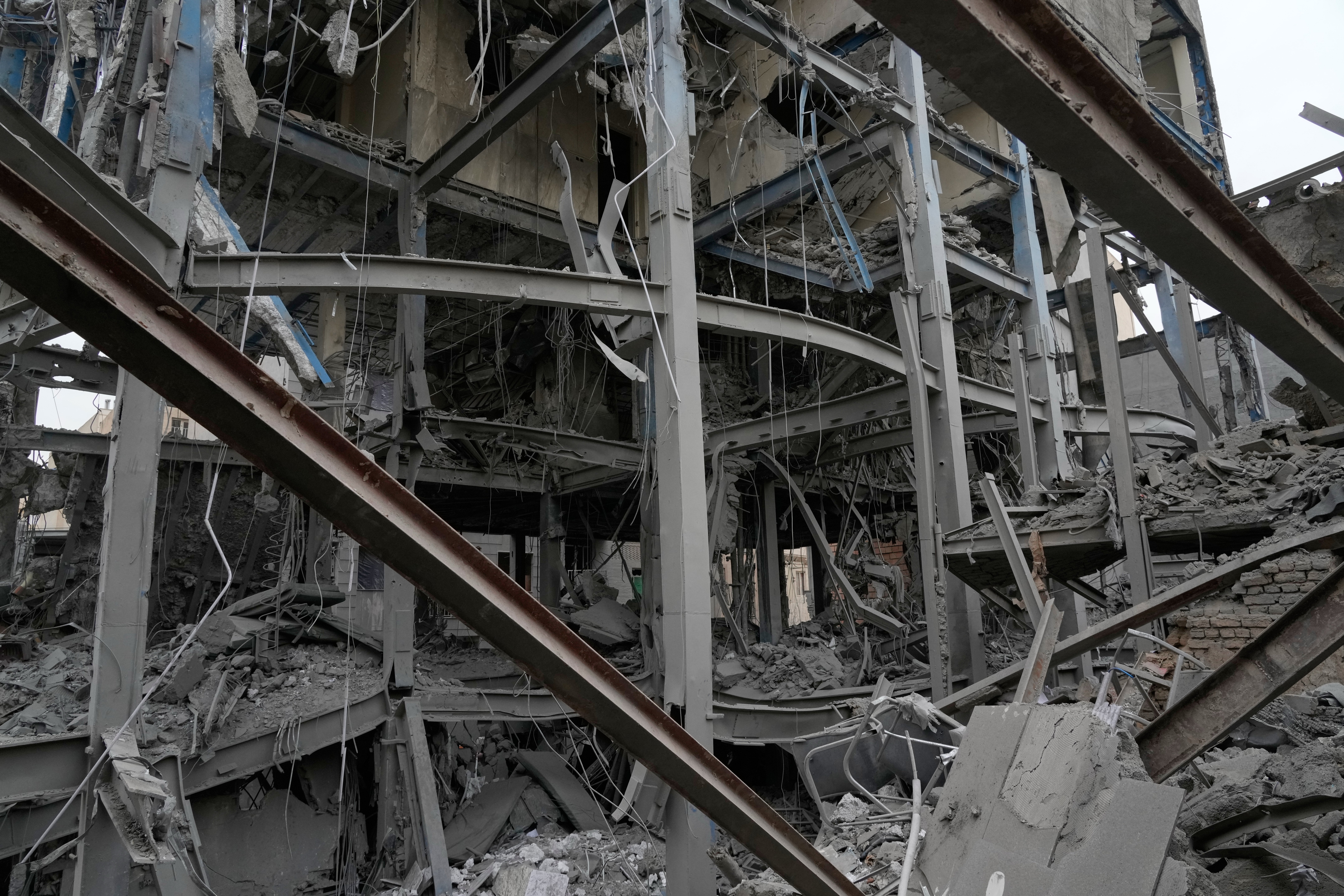
Pictured: The shattered structure of a police station is seen after it was hit Friday in Tehran
Spain to reduce VAT on fuel to 10 per cent
Spain will reduce VAT on fuel to 10 per cent in order to mitigate the impact of the Iran war, according to Spanish radio. It is currently 21 per cent.

Iranian missile hits infrastructure at Israeli oil refinery.
An Iranian missile has reportedly hit electrical infrastructure at a Haifa refinery, according to Israel’s oil refineries.
The refinery, hit on Thursday, supplied a service facility, a statement read.
It is expected to return to operations within a few days.
Watch: Iran airs disputed footage claiming strike on US F-35 jet
Analysis: Netanyahu is copying Putin’s tactics – it will backfire badly
Britain medicine supply at risk if Middle East conflict persists, trade group warns
Britain has so far avoided medicine shortages linked to the war in the Middle East, but soaring freight costs are squeezing generic drugmakers’ margins and could soon trigger price rises, supply shortages or both, trade group Medicines UK warned.
Chief executive Mark Samuels said Britain was “one step away” from medicine shortages if instability persisted, with stockpiles providing only a temporary buffer.
While supplies are still flowing, he said makers of cheap generics, which account for most NHS medicines by volume, were already under pressure from higher transport costs and shipping disruption. If freight costs persist, manufacturers may no longer be able to absorb them.
“If the conflict continues for the longer term, then I think manufacturers will cease being able to absorb the costs, and then we’ll either have some price rises for the NHS or we’ll have a failure to supply. Probably a mixture of both,” Samuels told Reuters in an interview late on Thursday.
Source: independent.co.uk
