

Key points on the desk as Iran and US maintain crucial nuclear talks
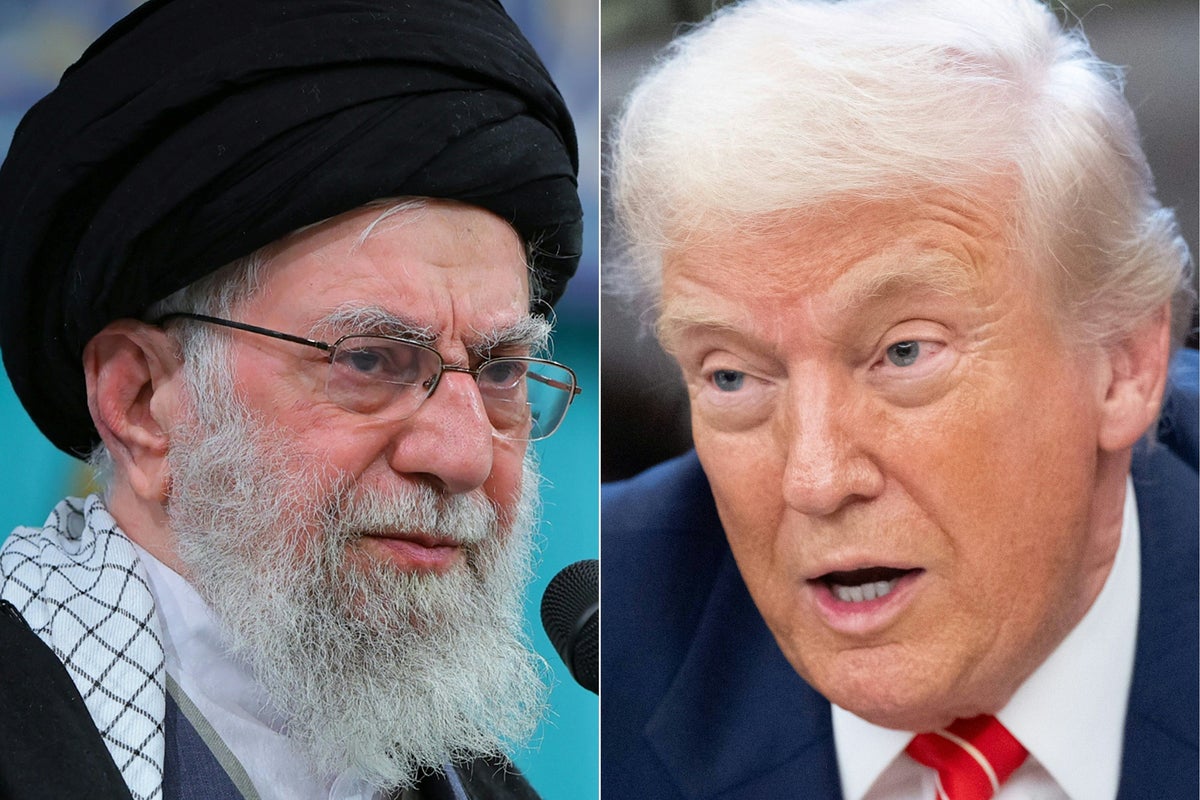
High-stakes talks are set to commence in Oman on Friday between Iran and the United States, marking the latest diplomatic effort concerning Tehran‘s nuclear ambitions. These discussions unfold against a backdrop of heightened regional tensions, following a 12-day conflict launched by Israel against Iran in June and a subsequent brutal crackdown on widespread protests across the Islamic Republic.
President Donald Trump has maintained significant pressure on Iran, deploying aircraft carriers and other military assets to the Gulf. He has also suggested potential US military action in response to the killing of peaceful demonstrators or if Tehran were to carry out mass executions following the protests. Mr Trump has also brought Iran’s nuclear programme back into sharp focus, particularly after the June conflict disrupted five rounds of talks held in Rome and Muscat last year.
Iranian Foreign Minister Abbas Araghchi travelled to Oman on Thursday evening for the discussions with the United States, as confirmed by his spokesperson, Esmail Baghaei. Writing on social platform X, Mr Baghaei stated that despite previous breakdowns in talks between Tehran and Washington and the military action last June, Iranian officials remain hopeful of achieving an “honourable” agreement on the nuclear issue.
“At the same time, we have a responsibility not to miss any opportunity to utilize diplomacy in order to secure the interests of the Iranian nation and safeguard peace and tranquillity in the region,” Baghaei affirmed.
As Friday’s meeting approached, questions lingered regarding the scope of the agenda. While negotiations are primarily expected to address Iran’s nuclear programme, US Secretary of State Marco Rubio indicated this week that Washington hoped to discuss broader concerns. These include Iran’s ballistic missiles, its support for proxy networks across the region, and the “treatment of their own people.” Iran, however, has insisted that talks should focus exclusively on the nuclear issue.
The current diplomatic push was initially spearheaded by President Trump, who last year dispatched a letter to Iran’s 86-year-old Supreme Leader Ayatollah Ali Khamenei. Khamenei has previously warned that Iran would retaliate against any attack, a threat made as the theocracy he commands grapples with the aftermath of recent protests.
President Trump sent his letter to Khamenei on 5 March 2025, subsequently acknowledging it in a television interview the following day. He stated: “I’ve written them a letter saying, ‘I hope you’re going to negotiate because if we have to go in militarily, it’s going to be a terrible thing.’”
Since returning to the White House, the president has advocated for talks while simultaneously escalating sanctions and hinting at potential military strikes by Israel or the US against Iranian nuclear sites. A previous letter from Mr Trump during his first term had elicited an angry response from the supreme leader. However, Mr Trump’s correspondence with North Korean leader Kim Jong Un during his initial term did lead to face-to-face meetings, though these did not result in agreements to curb Pyongyang’s atomic bombs or its missile programme capable of reaching the continental US.
Oman, a sultanate situated on the eastern edge of the Arabian Peninsula, has historically played a mediating role in discussions between Mr Araghchi and US Mideast envoy Steve Witkoff. The two officials have met directly following indirect talks, a rare occurrence given the decades of strained relations between the two nations. However, these efforts have not been without friction. Mr Witkoff once suggested in a television appearance that 3.67 per cent enrichment for Iran could be a point of agreement.
This figure precisely matches the terms of the 2015 nuclear deal, from which President Trump unilaterally withdrew the US. Since then, Mr Witkoff, Mr Trump, and other American officials have maintained that Iran should have no enrichment under any new deal, a condition Tehran steadfastly rejects. These earlier negotiations ultimately collapsed following Israel’s war on Iran in June.
The 12-day conflict launched by Israel in June included US bombing raids on Iranian nuclear facilities. Iran later confirmed in November that these attacks had led to a halt in all uranium enrichment within the country, although inspectors from the International Atomic Energy Agency have been unable to access the bombed sites.
Soon after, Iran was gripped by protests that began in late December over the collapse of its currency, the rial. These demonstrations quickly spread nationwide, prompting Tehran to launch a bloody crackdown that resulted in thousands of deaths and tens of thousands of detentions.
Iran’s nuclear programme remains a significant concern for Western powers. While Tehran has consistently asserted its programme is peaceful, Iranian officials have increasingly threatened to pursue a nuclear weapon. Iran currently enriches uranium to nearly weapons-grade levels of 60 per cent, a purity achieved by no other nation without a nuclear weapons programme. Under the original 2015 nuclear deal, Iran was permitted to enrich uranium up to 3.67 per cent purity and maintain a stockpile of 300 kilograms. The latest report from the International Atomic Energy Agency indicates Iran’s stockpile now stands at approximately 9,870 kilograms, with a portion enriched to 60 per cent. US intelligence agencies assess that Iran has not yet initiated a weapons programme but has “undertaken activities that better position it to produce a nuclear device, if it chooses to do so.” Israel, a close American ally, is convinced Iran is seeking a weapon and advocates for the complete dismantling of its nuclear programme, alongside a cessation of its ballistic missile development and support for anti-Israel militant groups such as Hezbollah and Hamas.
Relations between Iran and the US have been fraught for decades. Iran was once a key US ally in the Middle East under Shah Mohammad Reza Pahlavi, who purchased American military hardware and allowed CIA technicians to operate listening posts monitoring the Soviet Union. A 1953 CIA-backed coup solidified the Shah’s rule. However, in January 1979, the Shah, terminally ill, fled Iran amidst escalating mass demonstrations.
The Islamic Revolution followed, led by Grand Ayatollah Ruhollah Khomeini, establishing Iran’s current theocratic government. Later that year, university students seized the US Embassy in Tehran, demanding the Shah’s extradition and triggering the 444-day hostage crisis that severed diplomatic ties. The 1980s Iran-Iraq war saw the US support Saddam Hussein.
During the “Tanker War” phase of that conflict, the US launched a one-day assault that severely damaged Iran’s naval capabilities, and later shot down an Iranian commercial airliner, which the US military claimed to have mistaken for a warplane. Iran and the US have since navigated a complex path between animosity and reluctant diplomacy, with relations reaching a peak with the 2015 nuclear deal. However, President Trump’s unilateral withdrawal from the accord in 2018 reignited tensions in the Middle East that persist to this day.
Source: independent.co.uk
