

The Redistricting Wars Won’t Stop With The Midterms
PHOENIX, Ariz. – President Donald Trump and Republicans started the redistricting wars. Democrats might finish them.
Even as both parties continue to push state legislatures around the country to redraw their maps before the 2026 midterm elections, governors and candidates at the Democratic Governors’ Association here indicated the nationwide arms race started by Trump would not stop with this election cycle, with the party potentially taking advantage of midterm gains to draw new lines in critical states.
Advertisement
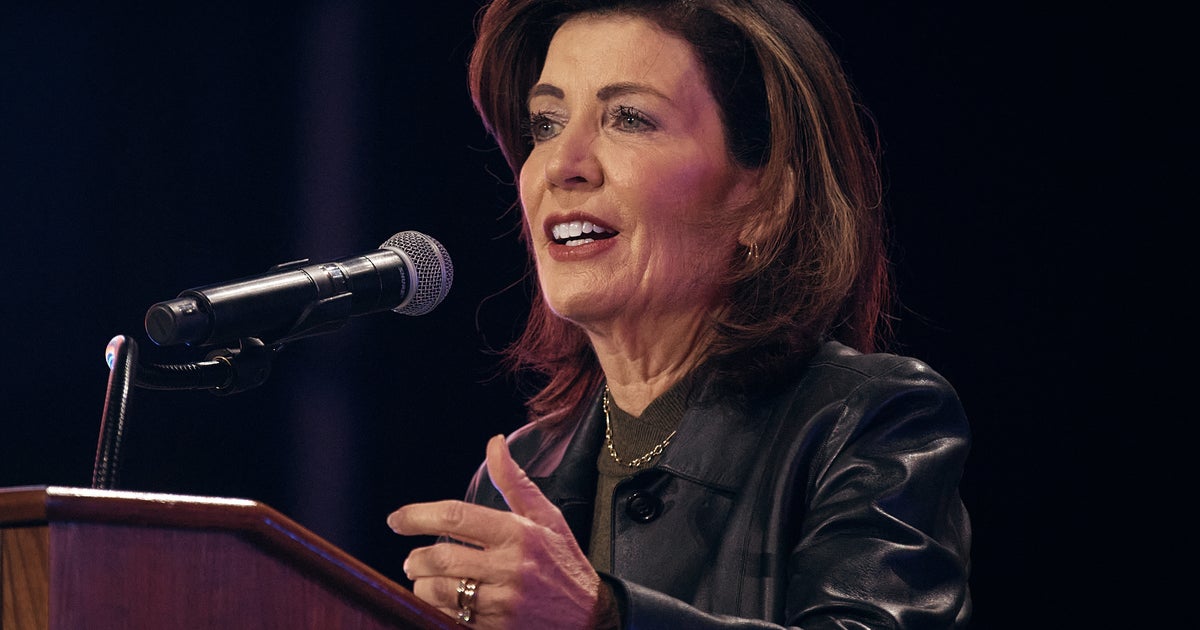
New York Gov. Kathy Hochul said she was committed to pushing through a constitutional amendment giving the state the power to temporarily bypass its independent redistricting commission before the 2028 elections, even if Republicans backed down from their plans to draw new lines.
“Texas is done, isn’t it?” Hochul told HuffPost, referring to the red state which drew new maps aiming to net Republicans more seats at Trump’s urging. “And that’s five seats.”
If the redistricting wars stretch into the 2028 election cycle, there is significant upside for Democrats, whose desire to respond to the GOP’s mid-decade gerrymandering has been limited by independent redistricting commissions in states like New York and Colorado. With Trump’s approval rating near all-time lows and the political winds at their back, Democrats are optimistic about gaining total control of state government in four other states where they would be free to draw more favorable lines.
Advertisement
In Wisconsin, for instance, the party has a strong chance to win control of both chambers of the state legislature for the first time in 15 years. If they also manage to hold onto the governorship, they would be free to redraw the existing GOP gerrymander. (The state Supreme Court, which liberals control, is already examining the legality of the existing map.)
“We have eight congressional districts, we only have two Democrats, and we’re a purple state,” said Lt. Gov. Sara Rodriguez, one of the leading candidates in a crowded primary for governor. “Clearly, the maps do not reflect the reality of the voting public within, and it is going to be important for us to look at redrawing.”
Another candidate in Wisconsin’s gubernatorial race, former Lt. Gov. Mandela Barnes, had a one-word answer when asked if the state would draw new lines: “Absolutely.”
Advertisement
Similarly, the party is targeting total control of the legislature and governorship in Minnesota, Nevada and Michigan, states with a combined 11 GOP-held seats. Changes in these states could also be logistically challenging — Minnesota has a constitutional ban on mid-decade gerrymandering and Michigan has an independent redistricting commission.
But other states are working to bypass similar obstacles: Drawing new lines in New York will require passing a constitutional amendment in two consecutive legislative sessions in 2026 and 2027, and then putting it before voters, but Hochul said she’s committed to pushing through a new map.
“I don’t have the same laws on my side as California, I wish we did,” Hochul lamented. “I hate it when people cheat. You can’t cheat, and that’s all this is. It’s a big power grab.”
Advertisement
New York isn’t the only state with an independent redistricting commission where voters could shunt it aside to help counter Trump. Sen. Michael Bennet (D-Colo.), who is running for governor, said he supports an effort to write a new constitutional amendment to offset gerrymandering in other states. (State Attorney General Phil Weiser, the other major Democratic candidate for governor, has already said he would support an initiative.)
“Unfortunately, we have to fight fire with fire,” Bennet, who supported bans on partisan gerrymandering white in the Senate, told HuffPost. “I think it’s important for Colorado to play our part but I hope what we do represents the temporary nature of this redistricting dispute.”
Bennet was not the only Democrat who treated the prospect of drawing new lines as a sad necessity rather than a gleeful partisan power grab. Newsom, who led a $120 million effort to pass Proposition 50, which was designed to counter Texas’ redistricting and could lead to five more Democratic-held seats, said he hoped the ongoing battle would lead Congress to pass a ban on partisan gerrymandering.
Advertisement
“This is not normal. This is not the approach we should be taking,” he told reporters. “This is ridiculous, of course. But it’s equally ridiculous to sit back and say that while the other side is consolidating power and rigging an election before one vote is even cast.”
The Californian, who is considered one of his party’s leading potential candidates for president in 2028, also gently called out two other governors and possible presidential candidates who have not yet managed to draw new lines.
“We’ll see what Wes [Moore] does, and JB [Pritzker] does, but they’ve said all the right things,” Newsom said, referring to the governors of Maryland and Illinois. Both have encountered resistance from state legislative leaders as they’ve pushed to reduce the number of GOP seats in their states.
Advertisement
Moore has convened a redistricting commission to examine new lines, and Democrats in the state believe they can overcome the opposition of state Senate President Bill Ferguson to drawing a new map that would eliminate the state’s lone Republican seat.
The redistricting battles, which kicked off in Texas, have also spurred Republicans in Missouri and North Carolina to draw new maps that should net them one seat apiece, and for Virginia Democrats to begin a process that could result in them gaining three or four seats. Republicans in Florida are also expected to redraw the boundaries in the Sunshine State to net the party more seats. A coming Supreme Court ruling on the legality of Article V of the Voting Rights Act could create more opportunities for GOP pickups.
The biggest existing showdown is in Indiana, where national Republicans — led by conservative groups like the Club for Growth and Turning Point — have applied intense pressure on state Senate Republicans to go along with a plan to eliminate two Democratic-held seats in the state. The state legislators have so far held out, though a final vote on the issue is expected on Thursday. The pressure campaign in Indiana has included death threats or so-called “swatting” attacks on 11 different Republicans who have resisted the redistricting push.
Advertisement
Regardless of the outcome in Indiana, it seems likely the redistricting wars won’t be the total win for the GOP many assumed at first glance, especially as Democrats in Virginia, California and elsewhere manage to push through the legal barriers analysts assumed would block them from doing so. It’s an example, Newsom said, of how the party needs to push back against Trump.
“We could have written an op-ed and tried to get into one of your respective newspapers,” Newsom said. “That’s probably what Trump expected. But we decided to fight fire with fire.”
