

All we find out about Iran’s 10-point peace plan after agreeing two-week ceasefire with US
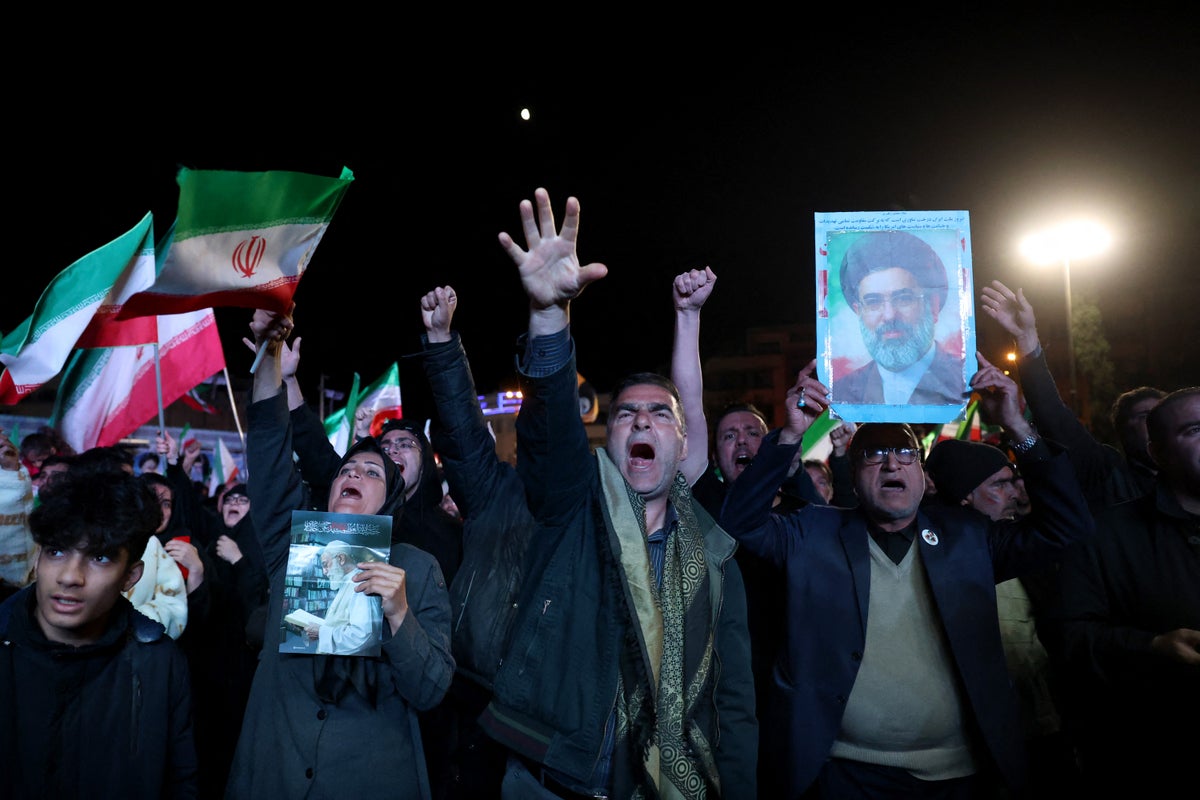
Iran and the United States agreed on an eleventh-hour ceasefire proposal overnight, announcing a deal less than two hours before president Donald Trump’s deadline for Tehran to reopen the Strait of Hormuz or face catastrophe.
Trump said late on Tuesday that he had accepted a two week ceasefire, paving the way for negotiators to work out the final details of a more enduring peace.
The abrupt turnaround came only hours after the president threatened that “a whole civilisation will die tonight, never to be brought back again” unless Iran met his deadline to reopen the Strait of Hormuz.
Iran and the US agreed on reopening the vital waterway in exchange for the US stopping attacks for the duration of the ceasefire. Both sides framed the deal as a victory, and Iran said it had agreed to talks with Washington to begin on Friday in Islamabad.
However, a number of issues are in dispute, as Israel said the ceasefire did not cover Lebanon, while mediating Pakistan said it did. Trump also said Iran had proposed a “workable” 10-point plan to end the war, but later called the plan fraudulent without elaborating.
The tentative agreement was still welcomed by international onlookers after a six-week conflict that has killed more than 5,000 people in nearly a dozen countries, including more than 1,600 civilians in Iran, according to local tallies.
Here’s what we know about the two-week ceasefire deal so far:
What does the ceasefire deal cover?
The two-week ceasefire deal is meant to buy breathing space for negotiators to finalise a more lasting peace agreement.
Pakistan’s prime minister, Shehbaz Sharif, mediating, said that the capital Islamabad would welcome representatives from both countries for negotiations aimed at a more conclusive agreement. Iran said that it had agreed to talks with Washington to begin on Friday.
Iran’s foreign minister, Abbas Araghchi, said in a statement that for the duration of the ceasefire, Tehran would stop counterattacks and provide safe passage through the Strait of Hormuz if attacks against it stop.
Trump, in turn, said the US would stop attacks so long as Iran retracts its effective blockade of the strait, which typically handles about one-fifth of global oil and gas shipments.
Israel said that it supported the ceasefire agreement and would also stop attacks on Iran. The Israeli Air Force carried out a final wave of strikes on Iran on Wednesday morning, before announcing it was respecting a ceasefire.
Pakistan’s prime minister said that the ceasefire would also include Lebanon, but his Israeli counterpart, Benjamin Netanyahu, said it would not.
What is in Iran’s 10-point proposal?
Donald Trump said that he had received a 10-point proposal from Iran, judging it “a workable basis on which to negotiate”.
He said that almost all of the points have been agreed, but a two-week truce will allow the agreement to be finalised. Trump did not say what the points were.
According to Iranian state media, the points include reopening the Strait of Hormuz, a commitment to the lifting of sanctions on Iran and an end to all conflicts in the region in their entirety, among other points.
Iran would also commit to not seeking possession of nuclear weapons.
The plan, as reported, would include conditions that the US has rejected in the past, including controlled transit through the Strait of Hormuz with Iranian armed forces, and the withdrawal of US forces from bases in the region.
The plan said an immediate ceasefire would take effect “on all fronts” upon approval of the other conditions.
The BBC, citing an Iranian state broadcaster, reports the following 10-point proposal
- Complete cessation of the war on Iraq, Lebanon, and Yemen
- Complete and permanent cessation of the war on Iran with no time limit
- Ending all conflicts in the region in their entirety
- Reopening the Strait of Hormuz
- Establishing a protocol and conditions to ensure freedom and security of navigation in the Strait of Hormuz
- Full payment of compensation for reconstruction costs to Iran
- Full commitment to lifting sanctions on Iran
- Release of Iranian funds and frozen assets held by the United States
- Iran fully commits to not seeking possession of any nuclear weapons
- Immediate ceasefire takes effect on all fronts immediately upon approval of the above conditions
What’s in dispute?
According to Pakistan and Iranian state media, the ceasefire agreement includes a provision for an end to all hostilities, including the conflict between Israel and Hezbollah in Lebanon.
Israel has said the agreement does not cover the conflict in Lebanon, and has continued strikes. Strikes were also reported at Iran’s Sirri Island and the Lavan refinery on Wednesday morning, source unknown.
The Associated Press reported that the Farsi-language version of Iran’s 10-point plan included a key detail that had been left out of the English versions.
The Persian language plan required the “continued Iranian control over the Strait of Hormuz, acceptance of enrichment, lifting of all primary and secondary sanctions”. But the “acceptance of enrichment” was left out of English language versions seen by journalists.
The US has not published the 10-point plan it claims to have seen. Trump also told the AFP news agency that there was a “15-point transaction, of which most of those things have been agreed on”.
Trump also told Sky News: “You don’t know what the points are. I know what the points are. And many of them are very good points. I can’t talk about it… but all of them are good points.”
Sky suggested it was unclear from their call whether Trump was referring to the same 10 points as Iran.
How did the world react?
The US president cast the ceasefire as a victory, saying the US had agreed as “we have already met and exceeded all Military objectives” and were “very far along with a definitive Agreement concerning Longterm PEACE with Iran”.
Iran’s Supreme National Security Council also portrayed the deal as a victory over the US, claiming Trump had accepted Iran’s conditions for ending hostilities.
Trump said Iran would be able to begin rebuilding, while the US would be “just ‘hangin’ around’ in order to make sure that everything goes well”.
Pakistan’s prime minister said that “both parties have displayed remarkable wisdom and understanding and have remained constructively engaged in furthering the cause of peace and stability”.
Israel said it welcomed the ceasefire, but would not stop hostilities in Lebanon. Hezbollah spokesperson Ibrahim Moussawi said if Israel does not adhere to the ceasefire, nobody will commit to it.
British prime minister Keir Starmer said the UK would “do all we can to support and sustain this ceasefire”. He said news of the truce would “bring a moment of relief to the region and the world”.
Downing Street said the prime minister was heading to the Gulf on Wednesday to meet regional leaders to “discuss diplomatic efforts to support and uphold the ceasefire”. The trip was planned before the ceasefire announcement, No 10 said.
What happens now?
Delegations from the US and Iran are to meet in Islamabad, Pakistan, on Friday for talks aimed at finalising the details of an enduring peace agreement.
Iranian state media reported that talks may be extended if needed, while cautioning that the ceasefire talks do not amount to an end to the war.
Source: independent.co.uk
