

How Pakistan deployed ‘flattery as foreign policy’ to dealer US-Iran ceasefire
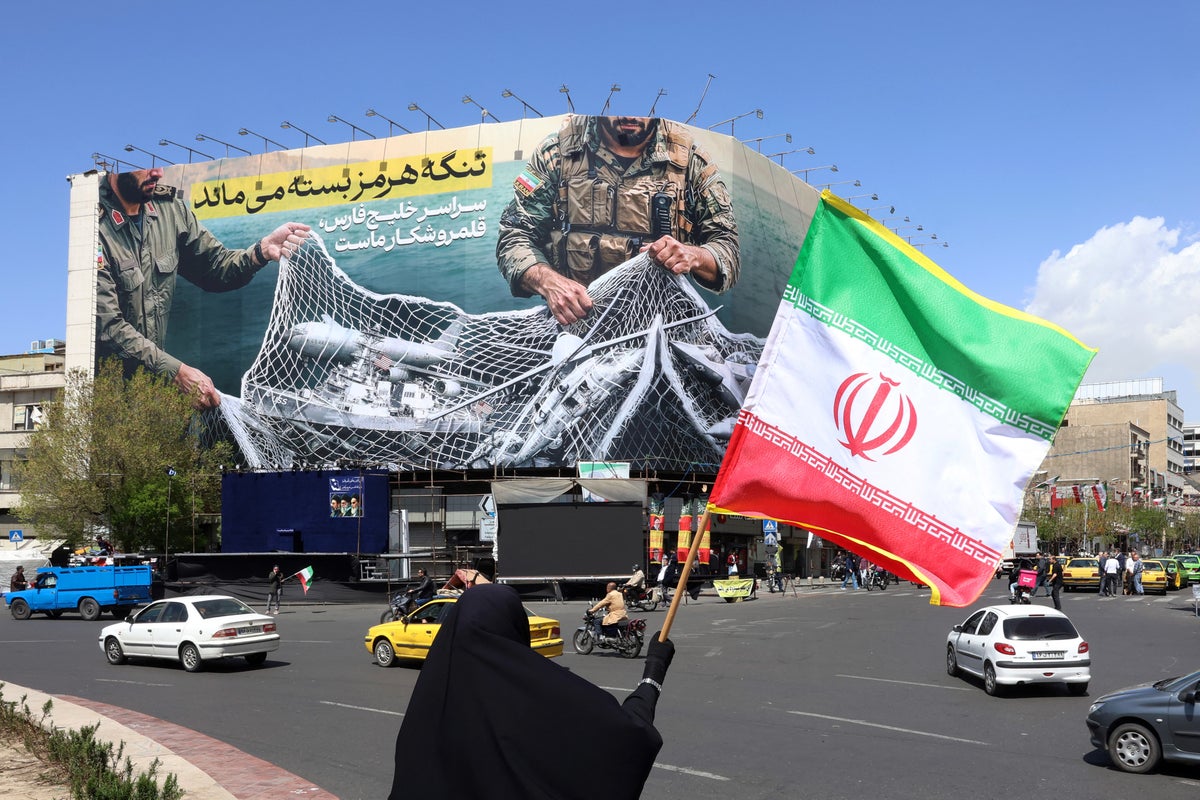
The US-Israeli war on Iran came to a sudden halt late on Tuesday with a two-week ceasefire announced after days of brinkmanship, thrusting Pakistan into the unlikely role of peacemaker in a conflict that has impacted almost every corner of the planet.
Iran and the US both claimed victory after Pakistan helped broker the truce, setting the stage for negotiations to end six weeks of fighting that killed an estimated 5,000 people across a dozen nations, including over 1,600 civilians in Iran, battered the global economy, and had the world bracing for the worst-case scenario.
Donald Trump may have been first to announce the truce, just 90 minutes before the deadline on his threat to wipe out a “whole civilisation”, but his post on Truth Social was swiftly followed by a tweet from Pakistan prime minister Shehbaz Sharif.
Sharif announced that Washington and Tehran had “agreed to an immediate ceasefire”, including in Lebanon, where Hezbollah was fighting an invasion by Israel. And he presented Pakistan as the venue where face-to-face discussions of a permanent peace deal can take place as early as Friday – what he referred to as the “Islamabad Talks”.
Analysts say Pakistan’s role in helping pull the Middle East back from the brink could mark one of its most significant diplomatic achievements in years, and it is one that has been welcomed throughout the region – even among commentators in neighbouring India, normally an arch rival, but where the pinch of oil and gas shortages has been keenly felt.
Ajay Bisaria, former Indian high commissioner to Pakistan, says Islamabad’s role should be welcomed despite the risk of the fragile ceasefire collapsing at any moment. “Pakistan’s role in constructing an off-ramp for the US and Iran in a dangerous war has been constructive and it should be welcomed by the world, including by India,” he tells The Independent.
Pakistan is not believed to be the only mediator who helped bring about Tuesday’s truce. Trump himself suggested that China – Iran’s biggest trading partner and the US’s most significant competitor – may have quietly pulled strings to find a pathway towards a ceasefire.
And it’s also the case that Pakistan’s involvement was at least partly driven by self-interest. The South Asian nation is heavily dependent on energy imports and has faced severe fuel shortages due to the war, as well as disruptions to remittances from its sizeable population working in the Middle East.
Even so, the optics of the ceasefire are significant for Pakistan on the world stage. It’s one of the nation’s “biggest diplomatic wins in years”, according to Michael Kugelman, a senior fellow for South Asia at the Atlantic Council.
“It defied many sceptics and naysayers who didn’t think it had the capacity to pull off such a complex, high-stakes feat,” he argues. “But what matters most is that it helped avert a potential catastrophe in Iran.”
Swaran Singh, a professor of international relations at Jawaharlal Nehru University in Delhi, points to the importance of Trump’s personal relationship with Pakistan’s powerful military chief, Asim Munir. Pakistan has been under direct military rule for 33 of the almost 80 years since independence, and even its civilian administrations have typically been heavily influenced by its generals.
Munir and Trump have grown increasingly close since the start of the US president’s second term, with Trump hosting the general at the White House more times than he has Pakistan’s actual prime minister. They seem to have got on well, with Trump praising Munir as a “great fighter” and his “favourite field marshal”.
Among leaders in Bahrain, Qatar, Oman, Egypt, Turkey, India, and Pakistan, Trump “appears most comfortable with the field marshal “and, therefore, decided to connect through him”, Singh says. Munir also enjoys close ties with the Iranian military.
Trump made two calls just minutes before announcing the truce, one to Munir and another to the Israeli prime minister Benjamin Netanyahu, two anonymous US officials told the New York Times.
Bisaria says that it isn’t surprising that the US turned to Pakistan to play the role of intermediary. Historically it has been an important geostrategic ally of the US, with its powerful military playing a central role in managing ties with Washington.
The relationship has suffered its share of setbacks over the years, however, hitting the lowest level during the previous Joe Biden administration as the US left Afghanistan and forged closer ties with rival India as a counterweight to China.
The shift under Trump became more noticeable during the four-day war between India and Pakistan in 2025, when the president claimed he had been the one to negotiate a ceasefire. While New Delhi was reluctant to credit the US president, Islamabad embraced Trump’s mediation wholeheartedly and promoted him as a peacemaker – even nominating him for the Nobel Peace Prize – and thereby earning his favour.
Aqil Shah, a professor of political science at McDaniel College, calls it “flattery as foreign policy”. In an interview with the New Yorker, he argued that Pakistan achieved unexpected success at India’s expense by cleverly tapping into Trump’s desperation for adulation and praise to get into his good books.
“In terms of the conflict with Iran, Pakistan has always seen itself as a sort of leader of the Muslim world,” he argued. “And so it has used this opportunity, because of its relationship with Trump or privileged access to Trump, and the fact that it borders Iran and is also fifteen to twenty per cent Shia, to try this balancing act.”
It is by no means certain that the “Islamabad Talks” will go ahead this Friday, or that the ceasefire will be successfully converted into a full peace agreement.
Singh says the situation remains complex as Israel, a party to the war, is apparently not involved in the ceasefire negotiations.
“It’s a good sign but there are lots of fault-lines and hiccups that still continue to exist,” he says. “It’s going to be fairly complicated to take it from this level to full-fledged negotiations.”
Analysts warn a trust deficit between the US and Iran is likely to complicate negotiations to build on the truce. They note that two previous rounds of talks collapsed into open conflict, underscoring the volatility of the relationship.
In the US, where Trump faces declining popularity, the deal is facing criticism for effectively giving Iran control over the Strait of Hormuz, a vital waterway that carries about a fifth of the world’s oil and remains largely shut.
Iran’s foreign minister, Abbas Araghchi, said safe passage during the two-week ceasefire would be coordinated with Iranian armed forces. The plan allows Iran and Oman to charge transit fees, with Tehran expected to use the funds for reconstruction.
Senator Chris Murphy of the Democratic Party criticised Trump for delivering “a history-changing win for Iran” by effectively handing it control over the strait, calling it “stunning and heartbreaking incompetence”.
Source: independent.co.uk
