

‘No Reason To Expect It Would Go Any Better Than Iraq’: Trump’s Venezuela Gambit Could Go From Confusion To Disaster
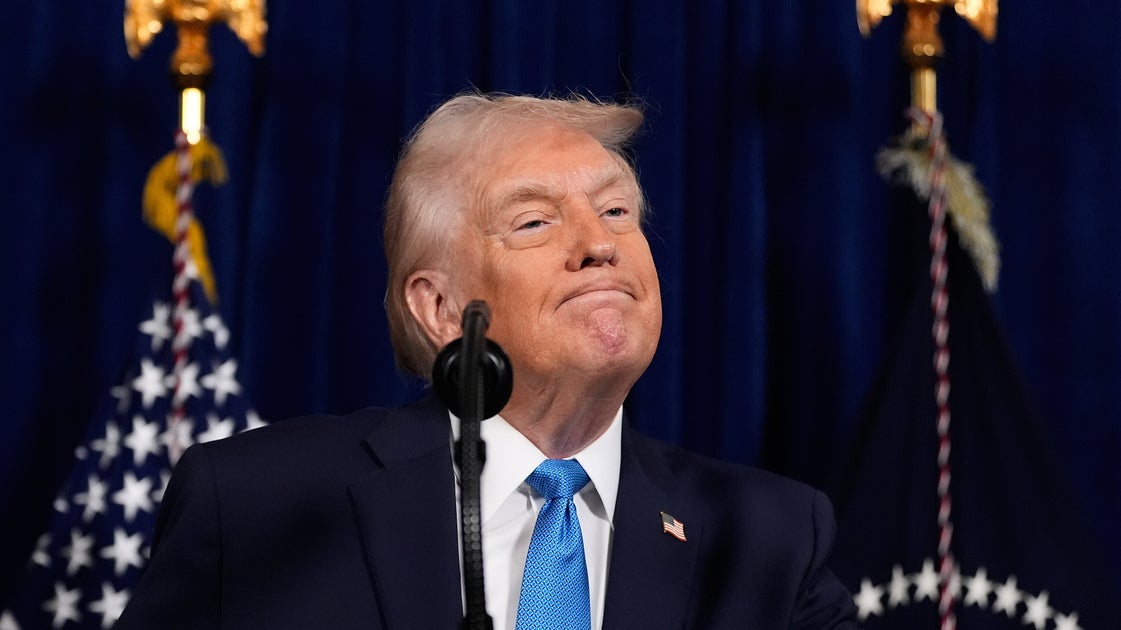
President Donald Trump’s Saturday move to abduct Venezuelan President Nicolás Maduro and attack his country, killing 80 soldiers and civilians, could reshape Venezuela ― particularly after Trump subsequently said the U.S. will now “run” the country and bolster access to its huge oil reserves.
While the Trump administration outlined its intentions for Maduro, aiming to prosecute him in New York on drug trafficking charges, Washington has provided few details on its hopes or plans for Venezuela, a nation of 28 million people that has already endured political repression, corruption and a severe collapse of living standards spurring a refugee crisis, in part because of years of American sanctions.
Advertisement
Secretary of State Marco Rubio on Sunday argued U.S. involvement could be more modest than Trump suggested, using an American naval build-up off the Venezuelan coast to halt oil exports, the country’s chief source of income, and to pressure the government in Caracas, now led by Vice President Delcy Rodriguez, to alter its policies.
But the drastic changes the administration appears to seek ― American companies rebuilding the Venezuelan oil industry, an overhaul of Venezuelan society, and the country aligning with the U.S. against long-time partners Cuba and China and against drug traffickers ― will likely require significant American resources and attention. And fears persist that Trump could pursue further military action and/or other reckless moves, particularly given accusations the Maduro kidnapping was illegal and that the administration is shirking its responsibility to consult with Congress on entering a conflict. (Officials are calling the operation a law enforcement effort.)
HuffPost spoke with Columbia University professor Elizabeth Saunders about what to expect next for U.S. policy on Venezuela and the dire implications of Trump running what she calls a “personalist” foreign policy, as global affairs takes up what she calls a surprising level of his second presidency.
Advertisement
A day on from Trump’s statement of “We’re going to run the country of Venezuela,” what would that take? I’ve heard about folks inside the government feeling very unprepared for the task of running another country, particularly in teams like the Western Hemisphere Affairs bureau of the State Department, which covers the region. Some people have raised these questions of military contractors being brought in to help oil companies boost production in Venezuela, which seems to be Trump’s chief goal. How are you thinking about what Washington might push for?
Twenty-four hours on, I’m even more shocked by Trump’s statements at the press conference than I was when I heard them. And I wonder especially in light of Rubio’s comments this morning on the Sunday shows whether Marco Rubio and Pete Hegseth and everyone standing behind him was also shocked … I don’t think anyone could have been truly surprised that he went, but saying that he was going to do “boots on the ground” and run Venezuela was deeply shocking. I don’t think we have any idea what it means for the Trump administration to “run” Venezuela. It doesn’t seem like Marco Rubio, who is the secretary of state, the national security adviser and the acting national archivist ―- and I believe he’s still the acting head of the remnants of USAID ― knows what it means either. If he thought about it, he probably would like to have USAID for this task and certainly a more robust State Department that hasn’t been gutted.
I expected there to be a lot of walk back in the press… a clean up in aisle Venezuela. I don’t think we have seen any coordinated effort to walk that back, which either means they’re just onboard with what Trump says or they’re just also still in shock.
Do you feel the administration could reach some sort of agreement with the Venezuelan regime, given mostly everyone is still there? Trump loves various autocrats ― can he get to some place of accommodation with acting leader Delcy Rodriguez (who has tried to negotiate with him) or someone else around her?
The range of outcomes here is enormous. It’s even more enormous than we all thought between the time when the news broke that Maduro had been extracted and the press conference, because of his statements about running Venezuela… in that sense the possibility of accommodation fits well within the range of possible outcomes. It’s no more outlandish than an occupation of Venezuela.
Advertisement
In the history of U.S. foreign imposed regime change or decapitations ― which is really what this is, taking out the leader but not the regime ― it’s very common to find an accommodation with the subsequent leader and then to be quite dissatisfied that they don’t do exactly what you tell them to do because, of course, they have their own interests. But Trump is not a detail-oriented leader, he wants to declare victory and go home, so it wouldn’t surprise me at all. He’s basically said that’s what he’s seeking, is an accommodation with Rodriguez. The question is whether she will play along, and so far, she hasn’t been, so if there’s going to be an accommodation, he’s going to have to work for it harder than he has up to this point.
How are you thinking about people in the military and government who are being asked to carry out these unclear and potentially illegal plans?
One thing a famous international relations scholar, Robert Jervis, always used to say is that we have to have a lot of sympathy for policymakers who make tough calls ― they often get them wrong, but they were trying their best. I wouldn’t say that’s true for the civilians in this case, for Trump and Rubio and Hegseth. I do think you have to have some sympathy for people all the way down the chain of command. … I have real questions about whether the whole thing is legal on any level.
Advertisement
It’s painful to watch the civil-military dynamics here because the military is a very competent organization. It can pull off operations like this which are dramatic and complicated, and it has jobs to do all around the world, but it’s being sent to do things that are probably illegal on at least one or two dimensions.
Yesterday, Trump’s comments were heavily about oil, certainly not about democracy for Venezuela. But we also know from The New York Times that this effort partly originated in Stephen Miller wanting a declaration of war to enable the use of the Alien Enemies Act for mass deportations. Then there are arguments about keeping China and Russia out of the U.S.’ sphere of influence. How does that confusion about objectives make it harder to get to a coherent policy here?
That’s a familiar dynamic from the Iraq War, where you had what political scientists like to call a logroll, where lots of people can support a policy because they get something out of it even if they don’t all get the same thing out of it. Some people were for invading Iraq because of a true neoconservative belief in democratization by force; some people may have had oil motivations, although I don’t think that was dominant; some people may have wanted to just destroy another country bigger than Afghanistan as a demonstration of toughness. That’s what happens when there’s a policy that people prefer for their own reasons, but then everybody had different views of what had to happen next, so I think that’s what you have here.
Advertisement
This has been Marco Rubio’s pet project for a long time; Stephen Miller clearly saw that the drugs angle was something that could get Trump on board. So that’s part of the problem: If the goal is fuzzy from the beginning then no, you can’t have a coherent policy. Doing a foreign-imposed regime change and successfully rebuilding through occupation is extremely difficult and almost always fails. The best study we have of this, by David Edelstein, shows the times it worked, like in Germany and Japan. It worked because there was some other external threat. The Germans welcome the Americans because they would hold off the Soviets. But there’s nothing like that here. So if they try to occupy Venezuela, there’s no reason to expect that it would go any better than Iraq.
But all that said, if they had a clear goal, at least they could do something more surgical and then declare a victory. Clarity of goals won’t necessarily solve the post-war problem, but a lack of clarity in the goals will certainly not help.
And we don’t even know if we are post-war.
I’m used to saying it for Iraq. What do we call this? The post-maybe invasion? It’s really bizarre ― we’ve declared that we’re occupying the country, sort of, by a press conference.
Advertisement
Linking to shifting goals are shifting narratives, particularly Rubio’s messages about not telling Congress in advance. This gets to an issue you’ve written about, with elites making foreign policy, the personalist dictatorship style of Trump, and the question of, “Are there any guardrails?” First, he said they didn’t tell Congress because they would leak it. Then he said, “I don’t have to tell Congress because it’s a law enforcement operation, not a national security operation or a war.” Does any of that make sense to you?
No. And I would say that’s Rubio in an oddly twisted way doing his job, which is to talk around the truth and just sidestep the questions. I’m not surprised he’s given two different logically incompatible explanations for why he didn’t tell Congress.
All that said, presidents rarely tell Congress, or if they do, they do it in the most cursory way. They inform Congress, but they don’t ask for authorization, they rely on old authorizations like 2001′s authorization for the use of military force [after the Sept. 11 attacks]. The fact of presidential power and the lack of going to Congress, oversight, all of that, those are long-term trends that Trump didn’t start.
Advertisement
To me, the big difference is that there is no process, there’s no guardrails internally inside the administration, which is often where the guardrails in most administrations come from. There was no stress-testing; they say they played war games, but if that press conference is any indication, it doesn’t seem any of that planning made it to the top. You can’t treat this like any other intervention ― this is incompetent, inexperienced people. I think of Hegseth at the hinge point: it’s the president, the secretary of defense and the combatant commanders. Hegseth is the hinge of the chain of command and just saying that out loud is breathtaking. So you have incompetent people, you have no process to course-correct here, you’ve got a completely absent Congress which, even in the case of Iraq there was a backchannel for concerns … and we know how badly that went! This is worse.
It’s bad that he didn’t brief Congress, but I think that it’s a bit of a red herring in terms of focusing on the big picture here, which is the utterly chaotic ― and not just poorly planned, but not-planned ― aftermath and the incompetence at every level of this administration with the fate of millions of Venezuelans in the balance. They will suffer for these events.
Advertisement
If they had gotten a briefing ahead of time, it still wouldn’t have made it OK. It still wouldn’t have solved the problem that they had no idea what they were going to do on the day after. It’s better they brief because processes matter, but it’s not a cure-all. I often think of congressional criticism of process questions, like the War Powers Act or repealing the AUMF as things that are like flypaper. They’re a place you can stick your angst … it’s a safe thing to do, complaining about process. It obscures the real issues.
It’s not that process isn’t important, but in this case … Congress is out. So let’s talk about how there’s no White House or national security process, because there used to be one ― and Trump broke it. It’s not that this operation would have gone well if there had been a great process, but it might not have ever happened at all, because in the first term, the advisers did constrain him from his worse impulses. Now he’s in a permissive environment where there’s nothing to stop his whims when he wakes up in the morning from being translated into policy that affects millions around the world. No amount of congressional briefing is going to fix that without serious action.
Can you identify the levers that Congress or people inside the administration could use to try to get back from what you have described as a “personalist” foreign policy?
Advertisement
Some of them are long-term… you have to pass legislation and get back to a place where expertise in Congress is valuable. The main mechanism through which Congress that actually constrains the president is not votes, and it’s not even really oversight. It’s the mechanism of what scholars call “anticipated reaction.” The president sitting behind the Resolute Desk in the Oval Office is thinking, “If I do this, what would be the consequences?” … By the time you get to a vote censoring the president or whatever it is, a lot of things have broken down. Those are not muscles that Congress is used to exercising.
You might have thought of the 25th Amendment, but the people who’d be invoking that, some of them standing behind Trump at that press conference, are not going to do it. Also, of course, Democrats don’t control either chamber [of Congress].
What you need are political stunts ― something that will command the airwaves, that you can’t look away from. I don’t quite know what that is. A filibuster marathon session on the Capitol steps? Something that can create a counter-narrative. But we’ve been in need of that since Trump took office, and that kind of elite leadership has been sorely lacking.
Advertisement
This interview has been lightly edited for length and clarity.
